
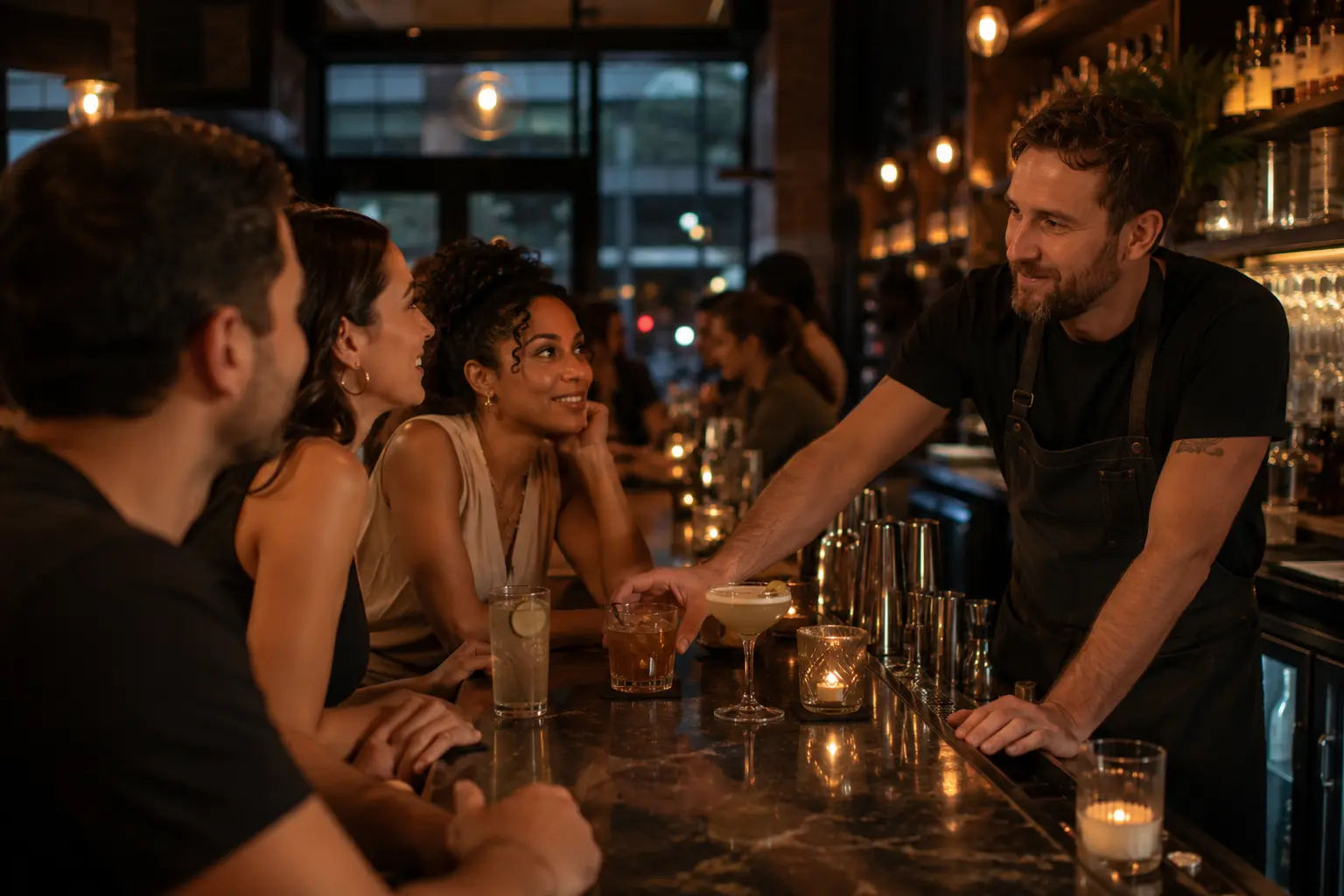

Neighborhood bars are not passive accounts. They are decision rooms. A guest walks in, scans the room, listens to the bartender, checks the specials, and makes the first drink call fast.
That first order does more than start the tab. It can set the category, the brand, and the tone for the rest of the occasion. NIQ reports that in neighborhood bars, winning the first drink of the night is critical because 80 percent of consumers choose the same drink category and brand after their initial choice. Source: https://nielseniq.com/global/en/insights/analysis/2026/from-value-to-vibe-how-moderation-preference-and-new-drinkers-are-reshaping-us-beverage-alcohol/
That should make every field team rethink the scoreboard. If the first drink locks in the occasion, then account coverage is not enough. The real KPI is first-order conversion.
Coverage Looks Good Until Nobody Orders
Account coverage is easy to celebrate. It gives the supplier a map full of dots, the distributor a clean report, and leadership something to put on a slide. But coverage does not tell you what happens when a consumer actually sits down.
A brand can be in the account and still lose the moment. It can be on the back bar, listed on the menu, approved by the buyer, and still get passed over when the guest makes the first call. That is the gap most activation plans refuse to admit.
The drink that wins first has a huge advantage. It gets the bartender into a rhythm. It anchors the guest’s expectation. It creates the category path for the rest of the tab. Once the first round lands, switching gets less likely because the occasion already has direction.
The First Drink Is a Field Sales Problem
Too many teams treat first-order behavior like a consumer marketing issue that lives somewhere above the market. That is wrong. The first drink is won locally, at account level, in the minutes before and after the guest decides.
Field teams should care because this is where placements either become velocity or turn into dead inventory. A rep can win the menu slot, but if the brand does not influence the first order, the placement sits exposed. The buyer sees a bottle taking up space. The bartender forgets to recommend it. The next reorder gets harder.
A smarter bar activation strategy starts with the account moment:
- What does the guest see before ordering?
- What does the bartender have permission to recommend?
- What offer creates urgency without cheapening the brand?
- What occasion does the drink own in that specific neighborhood bar?
- What proof shows the activation actually changed behavior?
That is a better field conversation than “we are in 42 accounts.”
Neighborhood Bars Reward Momentum
Neighborhood bars are different from polished destination venues. They run on regulars, habit, bartender trust, group routines, and the small nudges that turn “I’ll have the usual” into “I’ll try that.”
That makes them powerful, but unforgiving. If your brand is not part of the first decision, it may not get another shot that night. The guest is not studying the portfolio. They are making a quick choice based on mood, comfort, price, visibility, and what feels easy to say out loud.
This is why generic activation underperforms. A national program can create awareness, but it often misses the actual buying moment inside the account. Neighborhood bars need activation that feels local, immediate, and relevant to the visit happening right now.
That could mean a first-round special, a featured serve during open hours, a bartender-backed recommendation, a limited-time neighborhood offer, or a promotion surfaced to nearby consumers before they walk in. The channel does not need more noise. It needs better timing.
Optimize for the Order, Not the Recap
The industry loves recap metrics because they are tidy. Accounts visited. Menus secured. Staff trained. POS delivered. Photos uploaded.
Useful? Sometimes. Enough? Not anymore.
If the first drink carries the occasion, then the KPI stack has to move closer to consumer action. Field teams should be asking what actually pushed a guest from awareness to order. That means measuring signals that matter after the placement is live.
A first-order activation lens looks for:
- Local consumer reach around the account, not just broad impressions.
- Promotion views tied to specific bars and restaurants, not vague awareness.
- Offers that create a reason to choose now, not someday.
- Account-level activity that supports reorder conversations.
- Repeatable proof that the brand can help turn placements into traffic.
This is how the rep gets a stronger story. This is how the buyer gets a reason to keep the brand active. This is how the supplier stops confusing field activity with field impact.
The Brand That Wins First Gets Remembered
Winning the first drink is not about gimmicks. It is about owning the moment when the guest is most available to be influenced. After that, habits harden fast.
For brands, this changes the activation brief. Do not simply ask where the product is placed. Ask where the product has a real chance to be the first thing ordered. Do not just count account coverage. Count the moments where the brand is visible, timely, and easy to choose before the first round lands.
The brands that understand this will build stronger neighborhood bar programs. The ones that do not will keep celebrating distribution while someone else wins the tab.
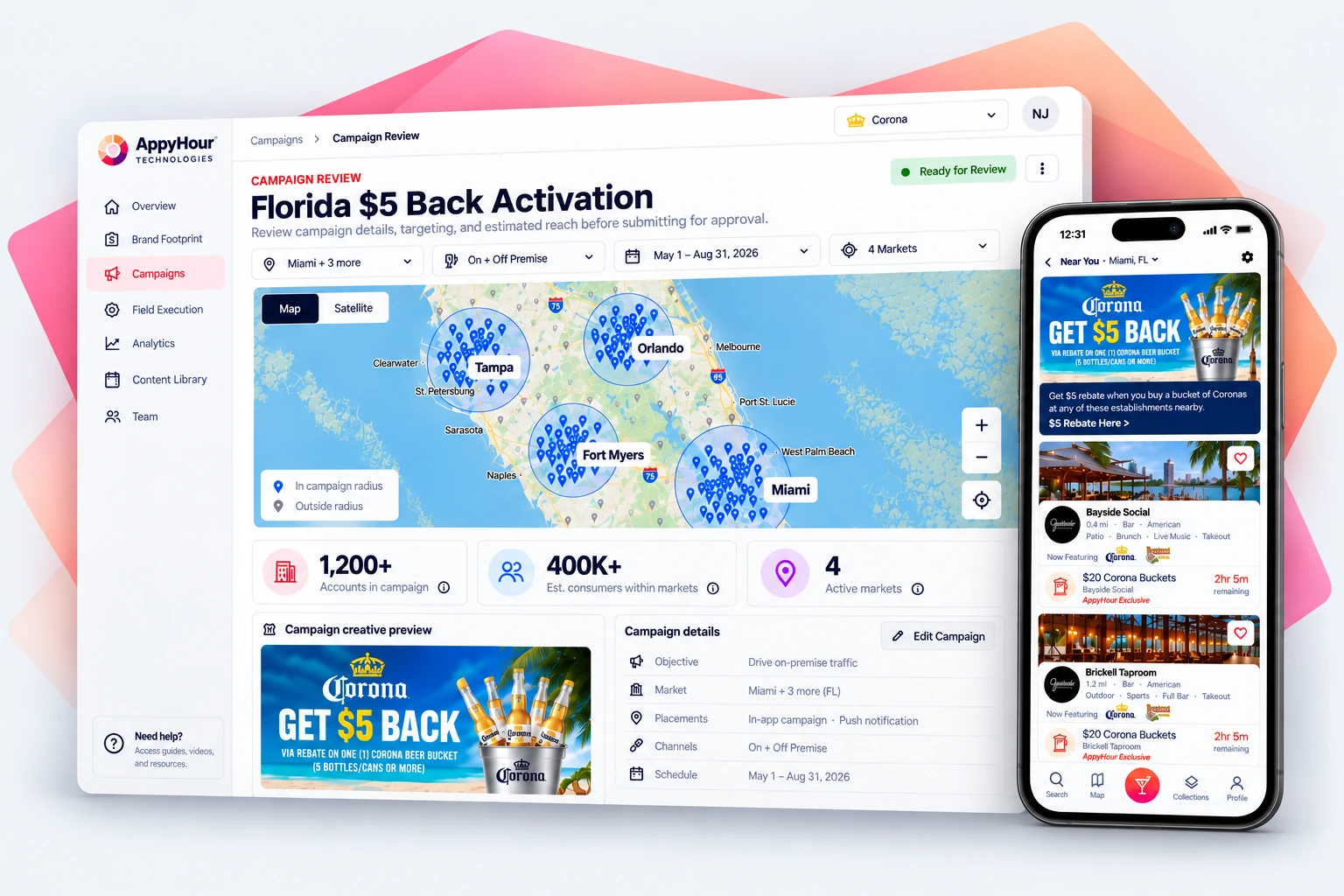
AppyHour fits this shift because we operate at the point of decision. We help beverage alcohol brands and retailers surface the right promotion to nearby consumers at the right local moment, turning account presence into first-order opportunity. Coverage gets you into the bar. First-order conversion gets you into the occasion.