

Here’s the uncomfortable truth.
A musician did more for Puerto Rican rum in one night than most brand teams will do in a year.
When Bad Bunny hit the Super Bowl stage, searches for “Puerto Rican rum” and “Coquito” spiked at Total Wine almost instantly.
❌ brand campaign.
❌ media plan.
❌ 12-month strategy deck.
Just culture.
That’s culture-driven demand in real time—and most beverage companies are completely unprepared for it.
What Is Culture-Driven Demand?
Culture-driven demand is when consumer interest is created by cultural moments—not marketing campaigns.
These moments can come from:
- Artists and celebrities
- Viral social trends
- Media events (like the Super Bowl)
- अचानक category spikes driven by relevance
And unlike traditional demand generation, they don’t follow a schedule.
They happen fast—and disappear just as quickly.
Culture-Driven Demand Doesn’t Follow Your Marketing Calendar
This is where most brands get it wrong.
They assume demand can be planned and controlled:
- Q1 planning
- Q2 activation
- Q3 optimization
But that model is outdated.
Today, demand shows up:
- Overnight
- Uneven across markets
- Tied to moments you didn’t plan for
By the time your team aligns internally, the opportunity is gone.
If your response takes weeks, you don’t have a strategy—you have lag.
The Bad Bunny Effect: A Real-Time Demand Spike
The Bad Bunny moment wasn’t just celebrity influence.
It was a velocity event.
Consumer behavior shifted immediately:
- Search volume increased
- Retail curiosity followed
- Purchase intent appeared in-store
But here’s the critical gap:
Did your product move as fast as the demand?
Because demand doesn’t automatically convert into sales.
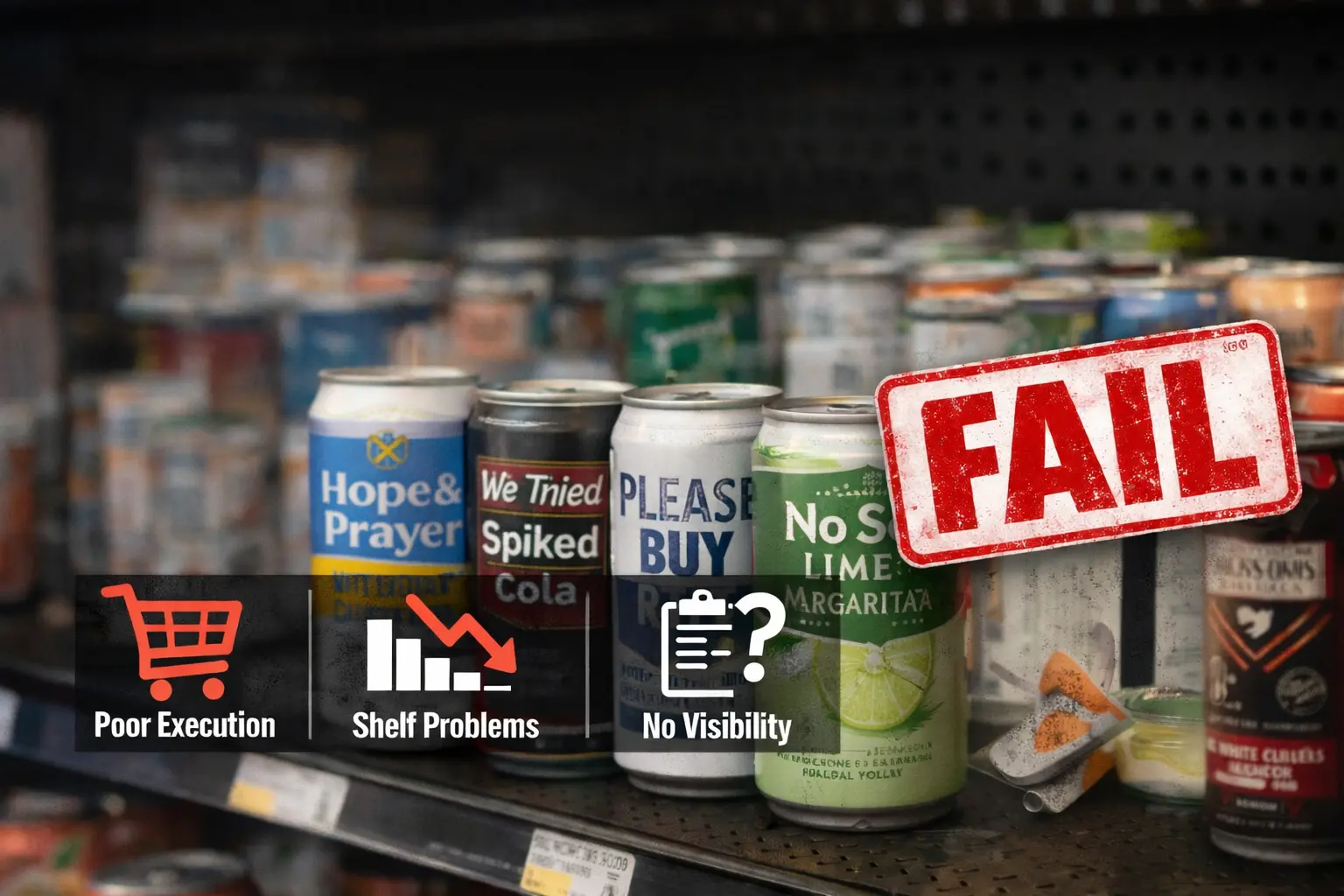
Execution is what captures demand—not awareness.
Why Beverage Companies Miss These Moments
Most beverage organizations are designed for planning—not reacting.
They depend on:
- Pre-planned launches
- Distributor coordination cycles
- Pre-approved POS
- Fixed programming
That structure works in stable environments.
But culture-driven demand is unstable by nature.
It doesn’t wait for approvals.
It doesn’t wait for creative assets.
And it definitely doesn’t wait for your timeline.
What Happens in the Field (And Why It Matters)
When a moment hits, the field sees it first.
Reps start getting real-time signals from accounts:
“Customers are asking for this—do we have it?”
And the typical response looks like:
- “We’re looking into it”
- “We’ll follow up”
- “Let’s cover this next week”
That delay is the problem.
Because while your team is aligning, competitors are acting.
Demand doesn’t disappear—but it does get captured by someone else.
The Cost of Missing Culture-Driven Demand
When brands miss these moments, the recovery playbook is predictable:
- Discounting
- Promotions
- Incentives
But price isn’t the issue.
Timing is.
You didn’t lose because the product was too expensive.
You lost because it wasn’t present when demand peaked.
Discounting after the fact doesn’t recover momentum—it compresses margin.
What High-Performing Beverage Teams Do Differently
The teams that win in culture-driven environments aren’t guessing better.
They’re operating differently.
They build systems designed for speed:
1. Real-time field visibility
They understand what’s happening in accounts right now.
2. Empowered sales reps
Reps can act, not just report.
3. Faster communication loops
Supplier, distributor, and field teams stay connected in real time.
4. A bias toward action
They treat demand spikes as opportunities—not noise.
Where Execution Breaks Down
This is the real issue—and it’s operational.
Most teams lack:
- Real-time communication from the field
- Visibility into in-store conditions
- Fast validation of emerging trends
- Connected systems across teams
This isn’t a marketing failure.
It’s an execution gap.
And culture-driven demand is exposing it faster than ever.
How AppyHour Helps Teams Capture Demand in Real Time
This is exactly the gap AppyHour is built to solve.
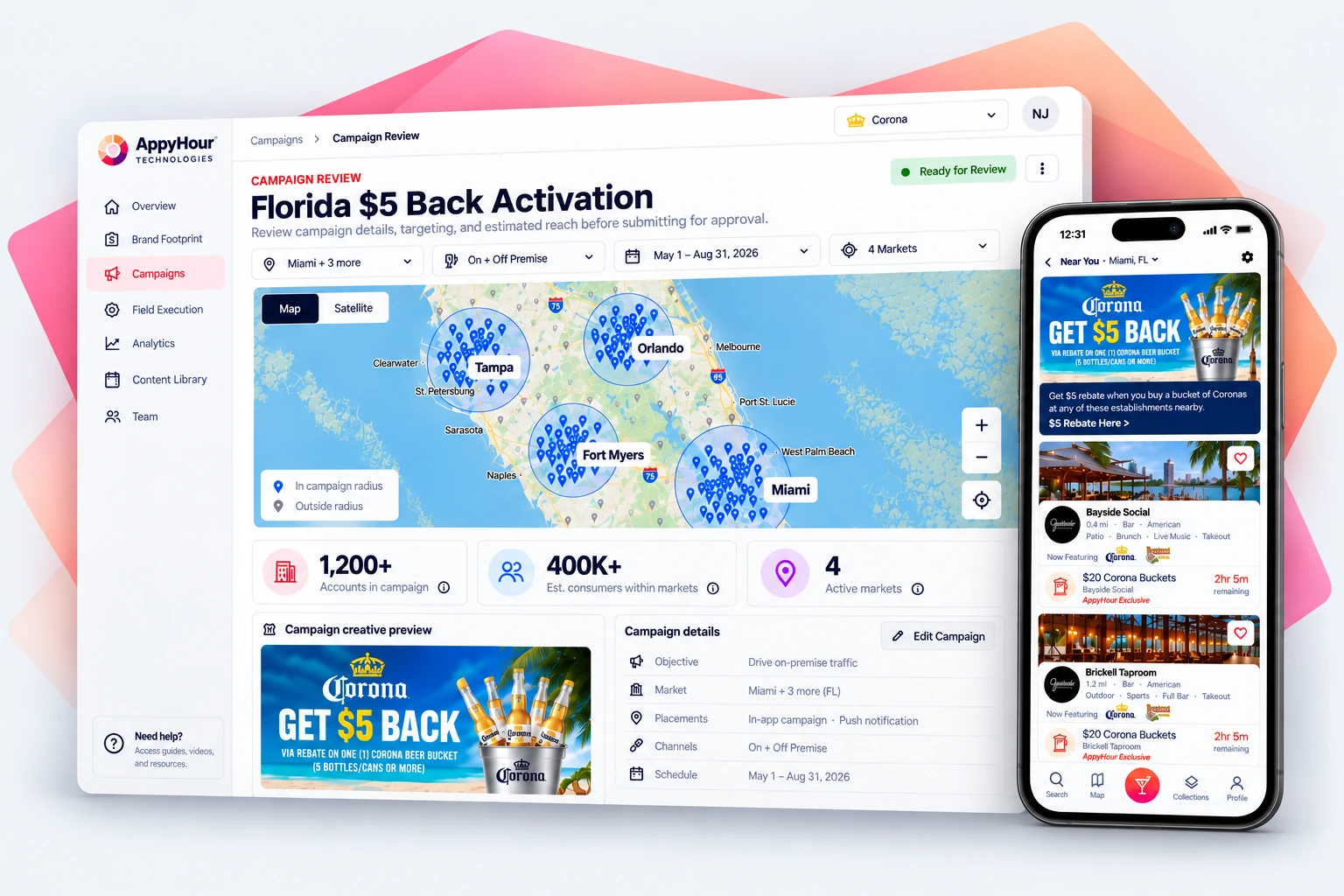
AppyHour gives beverage teams the ability to see, validate, and act on demand as it happens—not weeks later.
With AppyHour, teams can:
- Capture real-time insights directly from the field
- Share updates instantly across reps, distributors, and suppliers
- Validate in-store activity and account demand
- Reduce lag between signal and action
Instead of reacting after the fact, teams can operate inside the moment—when demand is at its peak.
The Shift Beverage Brands Need to Make
Most organizations are still asking:
“How do we create demand?”
But the better question is:
“Can we respond to demand fast enough to capture it?”
Because right now, brands are winning not because they planned better—but because they moved faster.
Demand Doesn’t Wait
Culture-driven demand isn’t predictable.
It isn’t evenly distributed.
And it doesn’t come back later.
You either capture it in real time—or you miss it entirely.
Final Thought: The Only Question That Matters
When the next moment hits:
Will your team see it, act on it, and capture it?
Or will you hear about it after it’s already over?